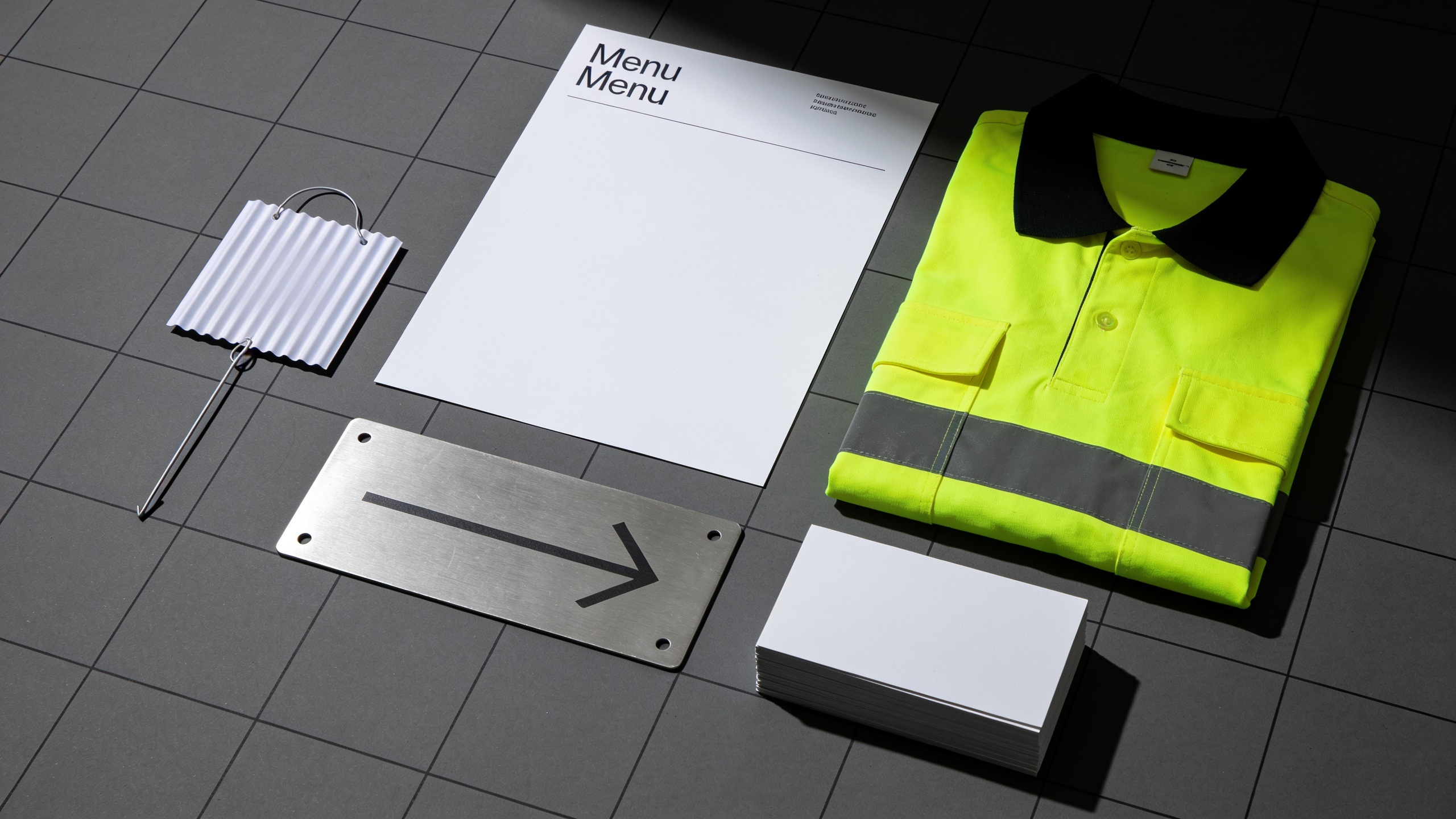
A restaurant orders more print than almost any other independent business, and it reorders most of it several times a year. Prices change. A dish comes off. A patio opens. The pieces that matter are the ones you will reprint, so the decisions worth getting right are the ones that make reprinting cheap.
Here is what an independent restaurant in Mississauga actually buys, in the order it usually gets bought.
Menus: the piece you will reprint
Two questions decide everything about a menu: how often prices change, and whether it gets wiped down.
If prices change more than twice a year, print on plain 100lb matte text and accept that you are reprinting. It costs so little per run that laminating is a waste — a laminated menu with an old price on it is worse than a paper one with the right price. A run of 100 double-sided letter-size menus on 100lb matte is roughly $95 to $140.
If the menu is stable, go heavier. 14pt or 16pt C2S card, laminated gloss or matte, survives being wiped between covers for months. Add roughly 60–80% to the paper price for lamination.
Takeout menus are a different item. They are a flyer: 8.5 × 11 or 8.5 × 14 on 100lb gloss, folded or flat, printed in the thousands. A thousand letter-size on 100lb gloss is around $189. There is a full breakdown of flyer sizes and stocks in this guide.
One rule regardless of stock: leave the prices in a column that can be reset without redrawing the whole layout. It sounds obvious. Most menus that come to us for a price change need the entire page rebuilt because the prices were set inline in the descriptions.
Window decals, and which type you want
There are four kinds and restaurants use three of them.
- White vinyl — opaque, applied outside, for hours and a phone number. Cheapest, most legible, least elegant.
- Frosted etch — translucent film that reads as sandblasted glass. This is the one that makes a plain storefront look considered. Used for a logo on the door and for privacy bands at seated height.
- Clear vinyl — printed on transparent film, applied inside the glass so it is protected. Right for a full-colour logo where you do not want a visible white border.
- 50/50 perforated — see-through from inside, solid image from outside. For covering a whole window without going dark inside. Restaurants rarely want this; retail does.
Window vinyl is sold by area. A door decal with hours and a logo is usually well under a square metre and lands in the $85 to $160 range depending on the film. A full band across a storefront is quoted per job.
Two practical notes. Measure the glass, not the frame. And decide before ordering whether the decal is applied to the inside or the outside — the artwork has to be mirrored for one of them, and finding out afterwards means a reprint.
A-frames and patio signage
A 24 × 36 A-frame with two printed inserts is the single highest-return sign a restaurant buys. It sits on the sidewalk, it is legal in most Mississauga plazas, and it converts foot traffic that had not planned to stop.
The frame is reusable. You replace the insert when the special changes, which costs a fraction of the first order — this is the same logic as a retractable banner stand, where the cartridge is the expensive part and the graphic is not.
For a patio, the pieces are usually: an A-frame at the entrance, a 13oz scrim vinyl banner on the railing (hemmed all round with grommets every 60cm, roughly $145 for 3 × 6 feet), and table tents if you sell drinks.
Staff kit
Restaurants order aprons, tees and caps, and the decision between processes is entirely about quantity.
- Under 24 pieces — DTF heat transfer. No minimum at all, full colour, no per-colour setup. One apron for a new hire is a real order.
- 24 pieces and up — screen printing gets cheaper per piece, and stays cheaper. Six spot colours maximum.
- Anything that goes through a commercial laundry — embroidery. It does not crack or fade, which is why hospitality polos are almost always stitched.
Embroidery has a one-time digitising charge of about $45 per logo — converting your artwork into stitch paths. Once that file exists, reorders skip it entirely, so a second batch of polos in eight months costs less than the first. The full process comparison is in DTF vs screen printing vs embroidery.
Aprons are the piece worth spending on. They are in every photograph a customer takes.
Loyalty cards, gift cards and the small stuff
Loyalty cards are business cards with a grid on the back. Print them on 16pt matte, not gloss — a gloss card will not take a pen, and a punch card that cannot be written on with the pen at the till is a card that gets thrown away.
Table tents, rack cards (4 × 9 on 16pt) and stickers are all small orders that get bundled onto a bigger job to avoid paying setup twice. Ask when you order the menus.
The online half
Two things matter and neither is a website redesign.
Your Google Business Profile is where most people find you. Hours, the menu link, the photos, and posts when something changes. Categories set correctly. An address and phone number that match everywhere else exactly, character for character. That last one sounds trivial and is one of the few things that measurably affects whether you show in the map results. There is a checklist in local SEO for Mississauga.
A menu people can read on a phone. Not a PDF. A PDF menu on a phone is a pinch-and-drag exercise and a meaningful number of people give up. Real text on a real page, which is part of what the website package, from $399, covers.
A sensible first order
- 100 in-house menus on 100lb matte
- 1,000 takeout flyers on 100lb gloss
- A door decal in frosted etch, and hours in white vinyl
- One 24 × 36 A-frame with two inserts
- 250 loyalty cards on 16pt matte
- Six aprons and a dozen tees, DTF
That is one delivery, one invoice, and roughly a week from artwork approval. Everything on this page is made at our shop on Skymark Ave in Mississauga.
If you have no artwork beyond a logo, that is normal and it is enough to start — we lay it out here and quote it up front. Call 905-598-3960, or look at printing and signage and custom apparel for the specs.