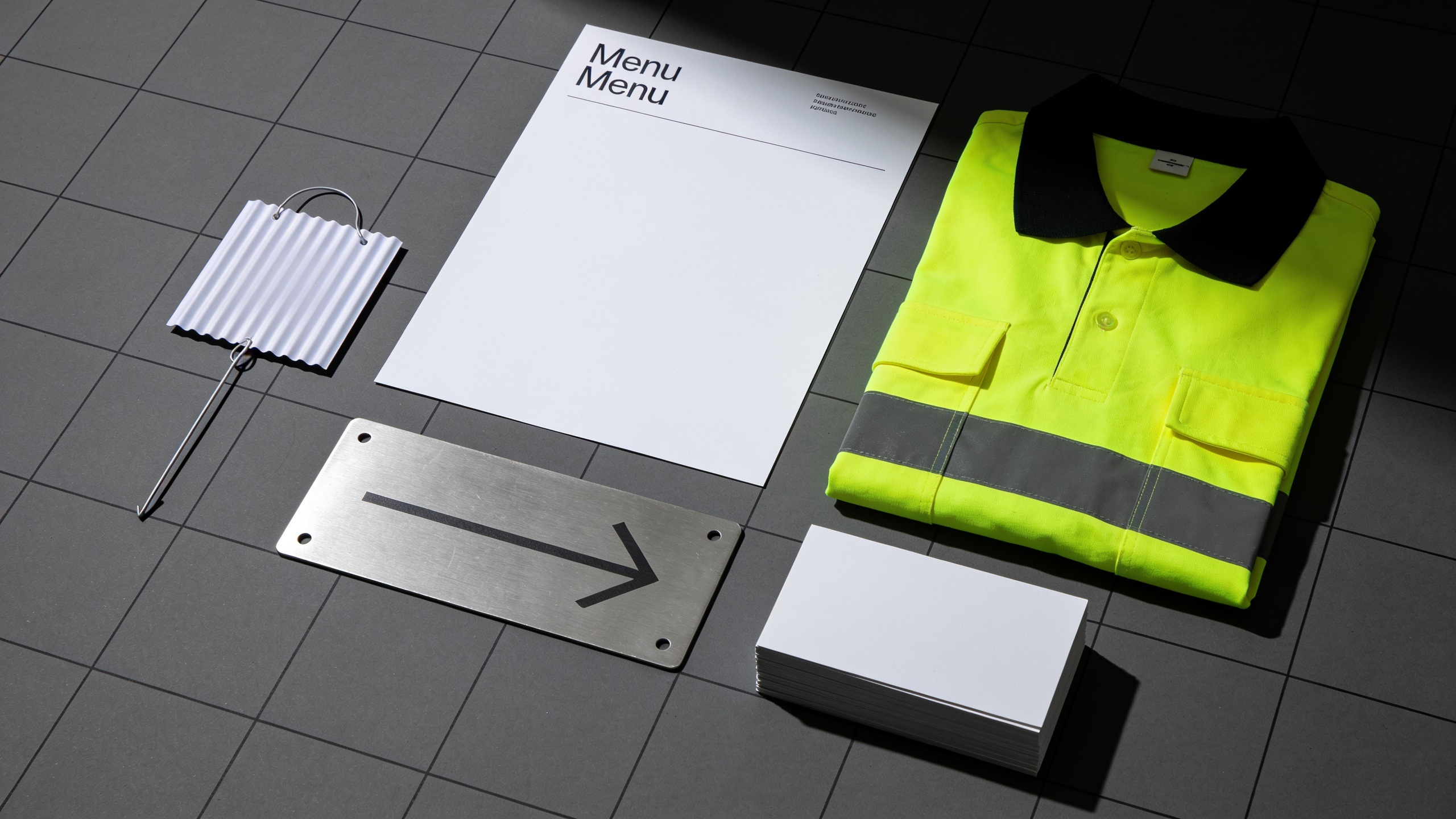
Clinics buy print for two reasons that have nothing to do with marketing: people need to find the room, and the paperwork has to be filled in. Everything else — the appointment cards, the recall postcards, the branded scrubs — comes after those two are working.
Here is the whole list, what each piece is made of, and what it costs.
Wayfinding: the signs that stop people getting lost
A multi-floor medical building is the hardest environment print gets asked to work in. People arrive anxious, often late, sometimes not reading English as a first language, and they are looking for a room number.
The pieces that do the job are boring on purpose:
- Directory plates at the elevator and the stair door. Brushed aluminium or white acrylic, mounted on standoffs so they read as permanent rather than taped up.
- Door plates with the room number and the practitioner. These are the ones that change, so they are usually a frame with a replaceable insert.
- Directional arrows at every point where a corridor branches. One arrow, one destination, nothing else on the plate.
- Reception and waiting-area signage — hours, policies, what to do if the desk is unattended.
Three rules from making a lot of these. Mount at eye height, 57 to 60 inches to centre, because that is where people look and it is also the accessible standard. Keep the contrast high — dark type on a light plate. And never put more than one instruction on one plate; a sign that says four things gets read as none.
A run of ten to fifteen plates for a small practice is quoted per job, and the design work is a fixed charge because the layouts repeat once the first one is set.
Forms: NCR, and why it is still the right answer
Intake forms, consent forms, treatment records and receipts still get filled in on paper in most clinics, and NCR — carbonless copy paper — is why. A 2-part form gives the patient a copy and keeps one. A 3-part gives you a file copy as well. Sets can be sequentially numbered, which matters when a form has to be traceable.
NCR is cheap, it is fast to produce, and there is nothing to go wrong with it at nine in the morning.
The design detail that matters: leave enough room. A form with 6pt boxes is a form that gets filled in illegibly and then transcribed wrong. Bigger fields cost nothing.
Appointment and recall cards
An appointment card is a business card with the date written on it. Print on 16pt matte, never gloss — a gloss card will not take a pen, and the whole point is that someone at the desk writes on it while the patient waits.
Recall postcards are the other half. A 4 × 6 postcard on 14pt or 16pt C2S, UV coated on the address side, mailed at six months. It costs a few cents plus postage and it brings people back. Print a year's worth at once; the per-piece price at 1,000 is a fraction of the price at 100.
Both are the same file year to year, so the second order is press time only.
Scrubs, lab coats and staff shirts
Clinics decorate garments that go through hot commercial laundry repeatedly, and that fact decides the process on its own: embroidery. A heat-pressed transfer will crack and lift after enough industrial washes. Stitching does not.
Standard placement is a left chest at 3.5 to 4 inches wide, which is 5,000 to 12,000 stitches for a typical clinic logo. We run up to 15 thread colours in a single design, so most medical logos go on exactly as drawn.
There is a one-time digitising charge of about $45 per logo — converting your artwork into stitch paths. It is charged once. After that the file is kept, so a new hire's set in eighteen months is stitched from the same file at the same size with no setup at all. Embroidered polos start around $28 a piece including the garment.
If you already own the scrubs, we decorate supplied garments. They need to arrive clean and unworn.
A practical note: put the practice name on the left chest and leave the individual's name off unless you are prepared to reorder every time someone leaves. Name tapes and badges are the cheaper way to do that part.
Window and door vinyl
Two pieces.
Hours and contact details in white cut vinyl on the entrance door. Legible, cheap, and the first thing someone checks when they arrive at 8:55.
Frosted etch film at seated height across any glass that faces a waiting area or a corridor. It reads as sandblasted glass, it costs a fraction of actually sandblasting glass, and it solves a real privacy problem rather than a decorative one. Sold by area; a typical band is well under a square metre per window.
Folders and patient information
A presentation folder on 14pt with glued pockets and card slits holds the treatment plan, the estimate and the aftercare sheet. For any practice quoting work in the thousands — orthodontics, implants, elective procedures — the folder does real work: it keeps the paperwork together long enough for the decision to be made at the kitchen table.
Aftercare sheets on plain 100lb text, printed in quantity, cost almost nothing and stop the phone ringing on a Saturday.
The online half
A clinic website has one job beyond existing: make it obvious how to book and how to get there.
The pieces that actually move the needle are the Google Business Profile — correct categories, real hours including holiday hours, the phone number matching the site character for character — and a page per location if you have more than one. There is a checklist in local SEO for Mississauga.
The site itself needs to be five pages, load fast on a phone, and carry a tappable phone number on every screen. That is the website package, from $399, and there is more on what a site should cost in this guide.
What a new practice orders in week one
- Directory and door plates for the suite
- Hours and contact vinyl on the entrance door
- 2-part NCR intake forms, 500 sets
- 500 appointment cards on 16pt matte
- Ten embroidered polos or lab coats
- A five-page website with the Google listing set up
That is one delivery and one invoice. Wayfinding and vinyl take a little longer than the paper because the plates are cut and finished; plan on two weeks from artwork approval for the signage and three to five business days for the print.
Everything above is produced at our shop on Skymark Ave in Mississauga and delivered across the GTA. Call 905-598-3960, or see printing and signage and custom apparel for the full specs.