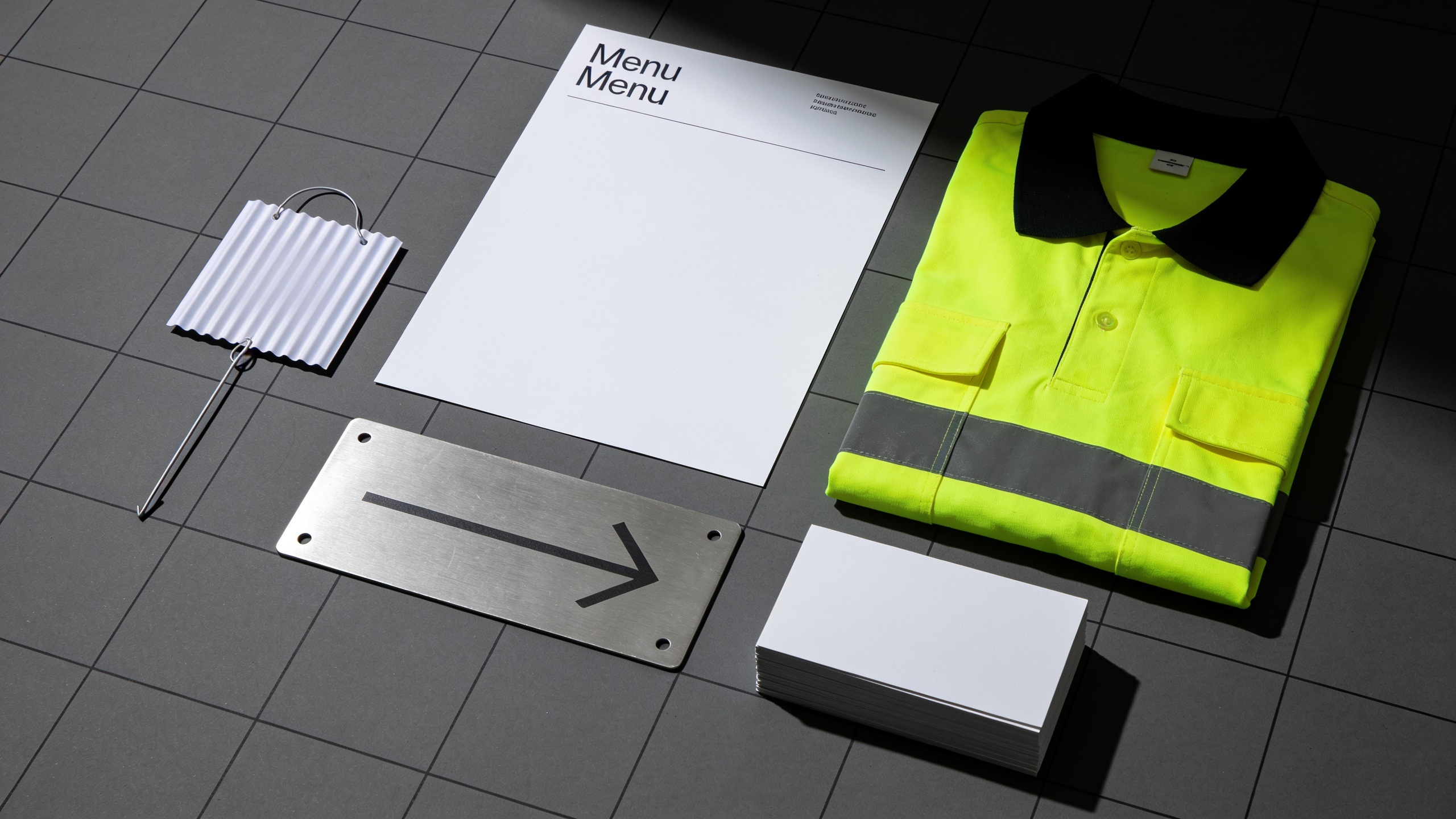
Real estate is the trade that orders the widest spread of print and the narrowest set of items. Almost every agent buys the same nine things, in roughly the same order, and almost every agent overpays for at least two of them because they were bought one at a time in a hurry.
Here is the whole list, what each piece is for, and what it costs at the sizes agents actually use.
The nine things, in the order you need them
- Business cards. The one piece that gets handed over at every showing.
- For-sale riders. The strips that clip onto the brokerage post.
- Feature sheets. The paper someone takes home from an open house.
- Open-house A-frames. Directional signs for the corner and the driveway.
- Coroplast lawn signs. For open houses, coming-soon and just-sold.
- Presentation folders. For listing appointments.
- Door hangers. Farming a street after a sale on it.
- Car magnets or door lettering. Your car is parked outside the listing all day.
- A website that loads on a phone. Because the QR code on the rider goes somewhere.
You do not need all nine on day one. Cards, riders and feature sheets cover the first six months.
What a for-sale rider costs
A rider is a strip that bolts to a brokerage post above or below the main panel. Standard sizes in Ontario are 6 × 24 inches and 6 × 30 inches, printed on 4mm coroplast for a season or on aluminium composite if you want it to last several years.
On coroplast, riders run roughly $18 to $28 each printed both sides, and the price drops sharply past ten. Most agents order ten to twenty at a time — the name and number never change, so the file is reused and the second order is press time only.
Two things decide whether a rider works from a car window: the height of the phone number, and the contrast behind it. A number that reads from across a residential street needs to be about 2.5 inches tall. Dark type on a light panel beats light type on a dark one at that distance, every time, and it survives a dull February afternoon better.
Feature sheets: what size, what stock
The default is a single 8.5 × 11 sheet printed both sides. It fits a standard folder, it scans on a home printer, and it costs almost nothing.
Stock is where agents differ. 100lb gloss text is the usual pick — it makes photographs look like photographs and it is the cheapest respectable option. 100lb matte or 80lb uncoated feels more expensive in a hand and is the better choice for a high-end listing where the photography is already good enough not to need the gloss.
For a run of 100 double-sided sheets on 100lb gloss you are in the range of $55 to $85, and for 250 you are barely above that — the setup is most of the cost, as it is with business cards.
A four-page folded feature sheet on 100lb text is the step up. It costs roughly double a flat sheet and is worth it above about the $1.5M mark, where the listing package is part of what you are being judged on.
Open-house signage that survives a windy Saturday
Two pieces do this job and they are not interchangeable.
Coroplast lawn signs are 4mm corrugated plastic on wire H-stakes. Standard is 18 × 24 inches. They go into a lawn or a boulevard in about four seconds and they cost around $210 per ten, printed one side with the stakes included. Double-sided costs more and is worth it only where traffic passes in both directions.
A-frames are the ones that stand on pavement. A 24 × 36 frame with two printed inserts sits on a corner without a lawn to push a stake into, and it is the right answer for a condo, a plaza entrance or a downtown street. The frame is reusable — you replace the insert, not the sign, so a seasonal change is a fraction of the first order.
If the corner is exposed, weight the A-frame. The cost of a sign that blows into traffic is not the sign.
Business cards, and the one detail that matters
A realtor's card is handed over more often than almost any other trade's, so it is felt more often. The difference between a 14pt gloss card and a 16pt matte card is a few dollars across the whole run and it is immediately obvious in a hand.
Above that, soft-touch lamination is the finish people notice without being able to name — the card feels like suede — and spot UV over a logo on a soft-touch card is the combination that gets kept. Both are quoted on top of the base card price. See the full price guide for the numbers by run size.
One practical detail: put the QR code on the back, not the front, and make it point at the specific listing rather than at your homepage. A code that lands on a homepage asks the person to go looking, and they will not.
Car magnets versus door lettering
Your car spends the day parked outside the listing. Both options put your name on it.
Magnetic panels are 30mil vinyl, roughly 12 × 24 inches, and they come off. That matters if the car is leased, if you share it, or if you would rather not advertise on a Saturday. They run about $95 to $140 a pair.
Cut vinyl lettering is applied directly and lasts years. It costs from around $180 per side and looks considerably better because it follows the shape of the door rather than sitting on it as a rectangle. It is also the honest choice if the car is yours and stays yours. There is a longer comparison in lettering versus a full wrap.
The website part
Most real estate leads now arrive through a portal, and the reasonable conclusion agents draw from that is that a personal site does not matter. It matters for one thing: it is where everything else points. The rider QR code, the card, the feature sheet and the door hanger all need somewhere to land that is not a brokerage template with someone else's face on the sidebar.
Five pages is enough. Home, listings, sold, about, contact. It needs to load in under about two and a half seconds on a phone on a weak connection, because that is where it will be opened — standing on a driveway. Our website package starts at $399 for exactly that, and there is more on what a site should cost in this guide.
What to buy first, on a real budget
- Under $300. 500 business cards on 16pt matte, and ten coroplast riders. That is the working minimum.
- Under $900. Add 250 feature sheets, an A-frame with two inserts, and ten lawn signs.
- Under $2,000. Add the website, presentation folders, and door lettering on the car.
Nothing above needs to be bought in one order, and the artwork carries forward — once your card exists, the rider, the sheet and the sign are all set from the same file, which is most of why the second order in any category costs less than the first.
Getting it made
Everything on this page is produced at our shop on Skymark Ave in Mississauga and delivered across the GTA, usually in three to five business days from proof approval. If your artwork is print-ready and approved before 11am we can turn stocked items around the same day.
If all you have is a logo from your brokerage and a headshot, that is enough to start — we set the artwork here and quote it up front. Call 905-598-3960, or see printing and signage for the full specs.